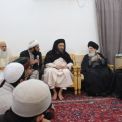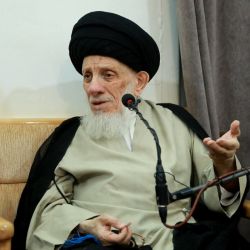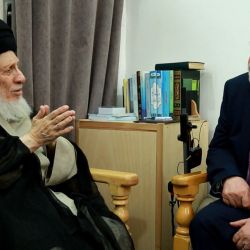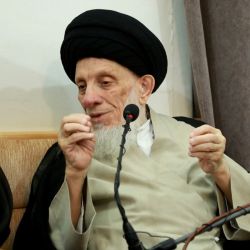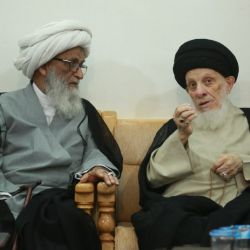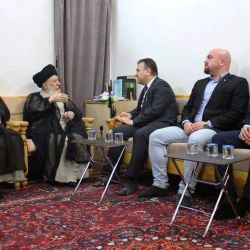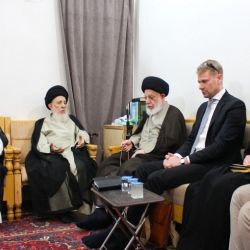
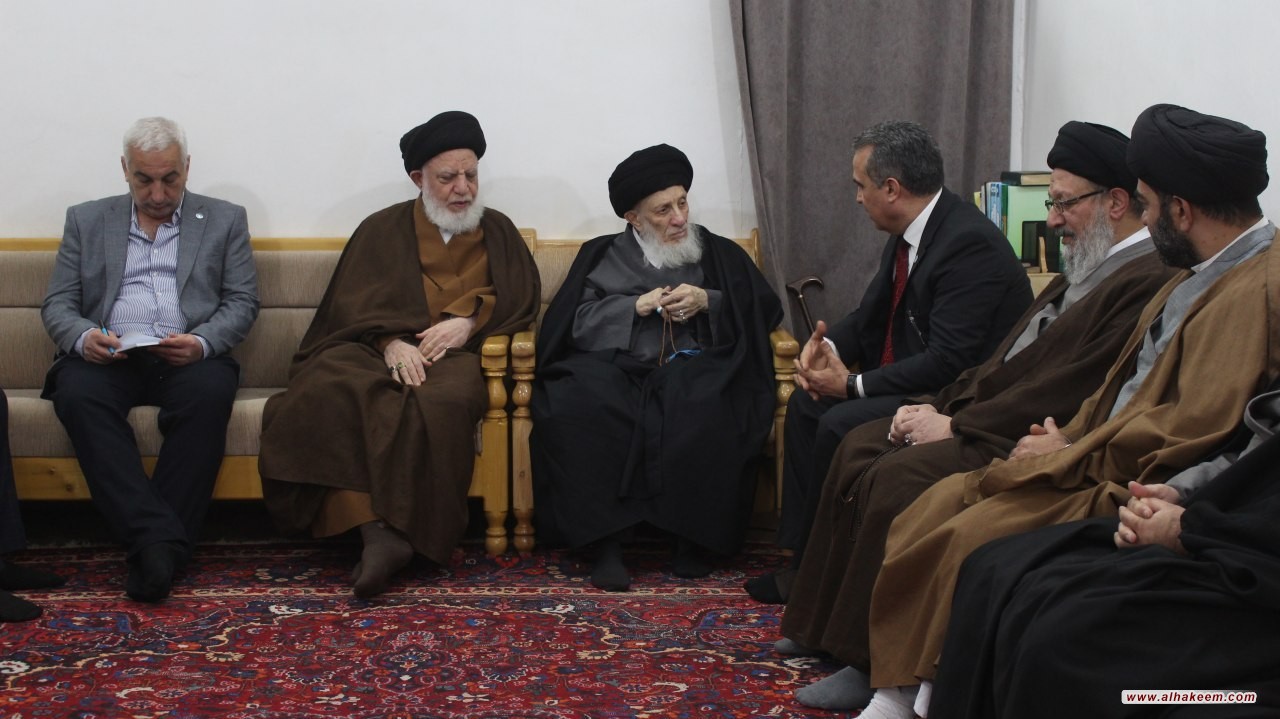
His Eminence Al-Sayyid Al-Hakeem meets with the Food and Agriculture Organization of the United Nations

His Eminence Al-Sayyid Al-Hakeem meets with the Food and Agriculture Organization of the United Nations
2020/02/19

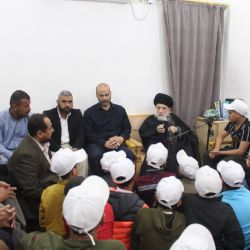
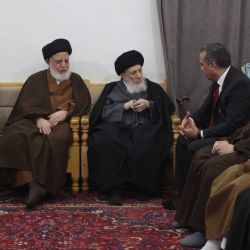
His Eminence Grand Ayatollah Sayyid Mohammed Saeed Al-Hakeem, on 15 February 2020, received representative of the Food and Agriculture Organization (FAO) of the UN in Iraq, Dr. Salah Al-Haaj Hasan and his team.

Dr. Salah Al-Haaj Hasan presented a report on the projects undertaken by FAO, consisting of ways in which agriculture can be improved in rural and semi-urban areas in Iraq, in order to ensure food provision for Iraq and a decent life for farmers.
Day Questions

I have converted to Islam 5 years ago, and I am interest in becoming a Shia. However, I have been battling in my heart if I should be Sunni or Shia, and I require guidance from scholars to clear confusion. My question is about the videos I see of people beating themselves with whips and swords sometimes until they bleed. Is this practice from the Sharia of the Shia faith, or is this practice something innovated by a small group of people who are following their own desires instead of any real authority in al Islam? If it is from the Sharia and it is one of the beloved actions to Allah then would you kindly explain this act to me, as it confuses me.

Thank you for contacting us and we emphasize our interest in submitting what can be to serve the truth and reality. We want to draw your attention to an important issue in your journey to seek the truth and pick the right path which is that you should search for the evidences that each side claims to prove the correctness of its views. So, you should search for what the Shia give as proof of the obligation of following the Ahlulbait after the death of the Holy Prophet (peace be upon him and his progeny) and do not look for the details at the present stage. Once the arguments are proven to you and you choose to follow the Ahlulbait, then you can look for explanations of their practices. If you are convinced, you can practice them, otherwise you can refuse to practice them. If you were to start searching for the explanations for the details of the practices then this might confuse you more. The thing that the Imams of the Ahlulbait emphasized on is the mourning and expressing pain and passion because of the oppression that the Ahlubait were subjected to, and the tragedies and hardships they faced. The course of practice that believers choose to express the mentioned obligation is entirely personal. Some express their feelings towards Imam Hussein (peace be upon him) and his companions and his household by crying, expressing their sadness and wearing black clothes. Others do so by slapping their chests. Some others self-flagellate to the extent of bleeding as a way to express their grief and sorrow, mourning for the Imam and his family and companions as they were killed and stabbed with spears, swords and arrows.

I came across many traditions of Imams of the Ahlulbait (peace be upon them) about Ghusl, Purification and Ablution in an authentic book. These traditions are being highly descriptive and specific about fundamental things in Fiqh. Is it permissible for me to follow the rulings of imams (peace be upon them) about the aforementioned things and follow the ruling of my Marja in other matters that cannot be found in traditions through authentic sources?

You should follow the scholar that reached the level of Ijtihad and fulfills all the other conditions of the Marji, since the derivation of the religious verdicts from the traditions require a great amount of knowledge and experience, and the religious jurists are those who have the experience and knowledge that they gain from full time learning of these particular subjects.

My Sunni friend wants to explore Shi'ism. She asked me where in the Nahj al-Balaghah has it been recorded that Imam Ali said that he is the successor of the Prophet (peace be upon him and his progeny)?

Some declarations of Imam Ali (peace be upon him) have been reported in the Nahj al-Balaghah in which he presents his view about the Imamate after the Holy Prophet (peace be upon him and his progeny). For example, he said in sermon number 144, “Where are those who falsely and unjustly claimed that they are deeply versed in knowledge, as against us, although Allah raised us in position and kept them down, bestowed upon us knowledge but deprived them, and entered us (in the fortress of knowledge) but kept them out. With us guidance is to be sought and blindness (of misguidance) is to be changed into brightness. Surely the Imams (divine leaders) will be from the Quraysh. They have been planted in this line through Hashim. It would not suit others, nor would others be suitable as heads of affairs.” He also said, in sermon number 3, “Beware! By Allah, the son of Abu Quhafah (Abu Bakr) dressed himself with it (the caliphate) and he certainly knew that my position in relation to it was the same as the position of the axis in relation to the hand-mill. The flood water flows down from me and the bird cannot fly upto me…”.